
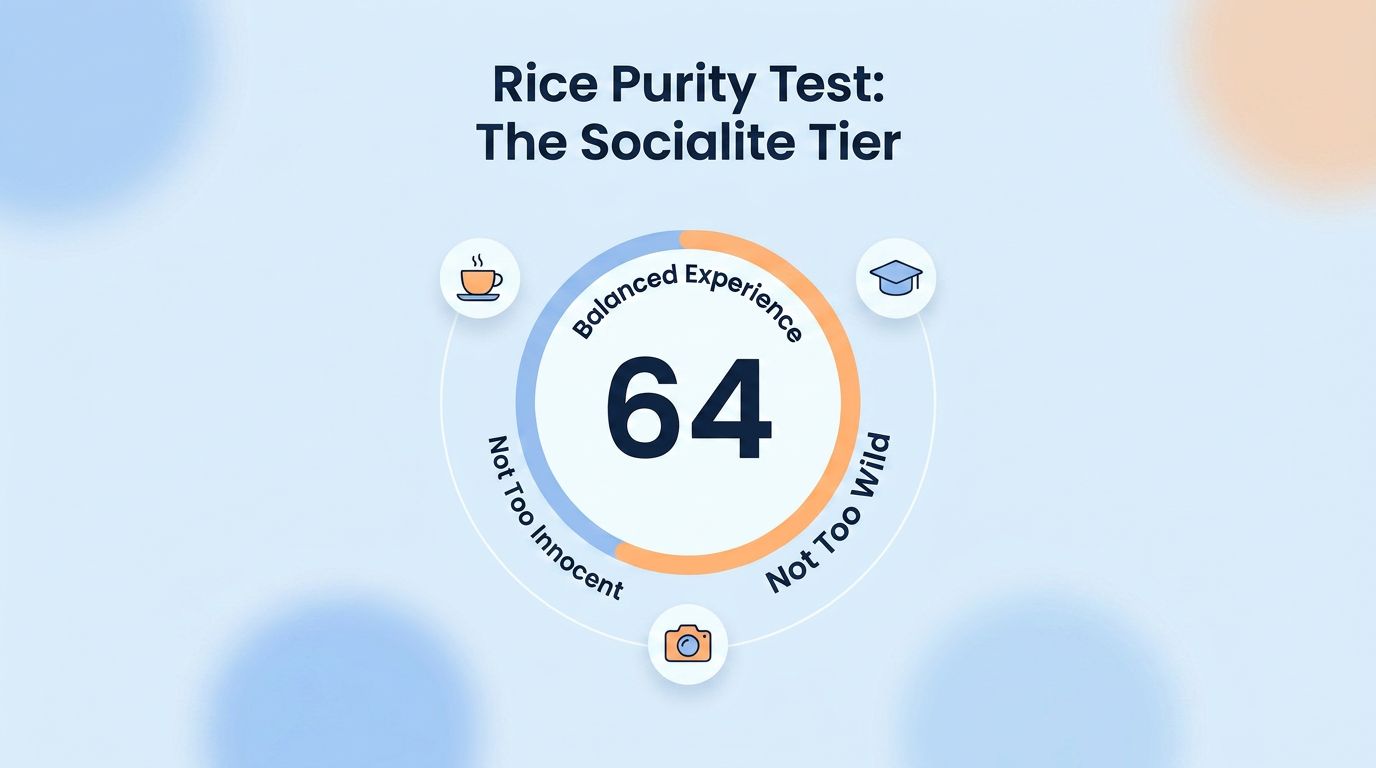
You’ve just finished clicking through all 100 questions of the viral the rice purity test. The screen flashes, and your result is a 64. Now, the panic sets in. You might be wondering, “is 64 a bad rice purity score?” or “am I too wild compared to my friends?”
Whether you are a college student in the USA or a young professional in Europe, understanding your rice purity test score meaning is essential to putting your experiences into perspective. In this guide, we’ll break down what a 64 truly represents in 2026 and how it stacks up against global averages.
What Does a 64 Rice Purity Score Actually Mean?
To answer the question, we first need to define the scale. The Rice Purity Test is an innocence-based checklist. A score of 100 means you haven’t checked any boxes (maximum innocence), while a score of 0 means you’ve experienced everything on the list.
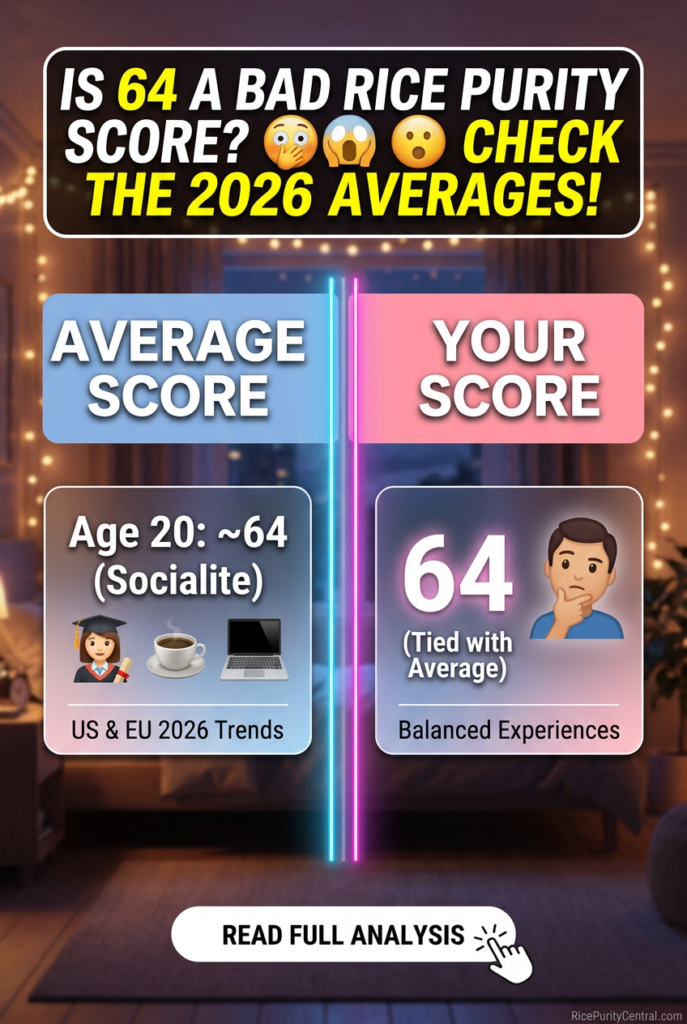
A 64 rice purity score places you firmly in the “Socialite” tier. This means you aren’t a “straight-edge” innocent, but you aren’t a “wild party animal” either. You occupy the middle ground—the sweet spot of life experience. Most people with a 64 have experienced typical milestones like dating, staying out late, and perhaps a few experimental college moments, but they still maintain a level of reserve.
Is 64 a Bad Rice Purity Score?
The short answer is: No. In fact, in 2026, a 64 is considered a very “normal” and balanced score. In the USA and EU, where social culture is quite open, a 64 suggests that you are well-adjusted. You’ve lived life, but you haven’t gone “off the deep end.”
However, “bad” is subjective. If you feel like your score is too low for your liking, you might be interested in reading about the History of the Rice Purity Test to see how these standards have evolved over time. Standard scores have changed over the decades, and what was considered “wild” in the 1980s is now quite common in the 2020s.
Average Rice Purity Score: How Do You Compare?
To truly understand if your score is “good” or “bad,” you have to look at the average rice purity score for your age group. Cultural norms in the West show that scores drop significantly between the ages of 18 and 22 as students move into university life.
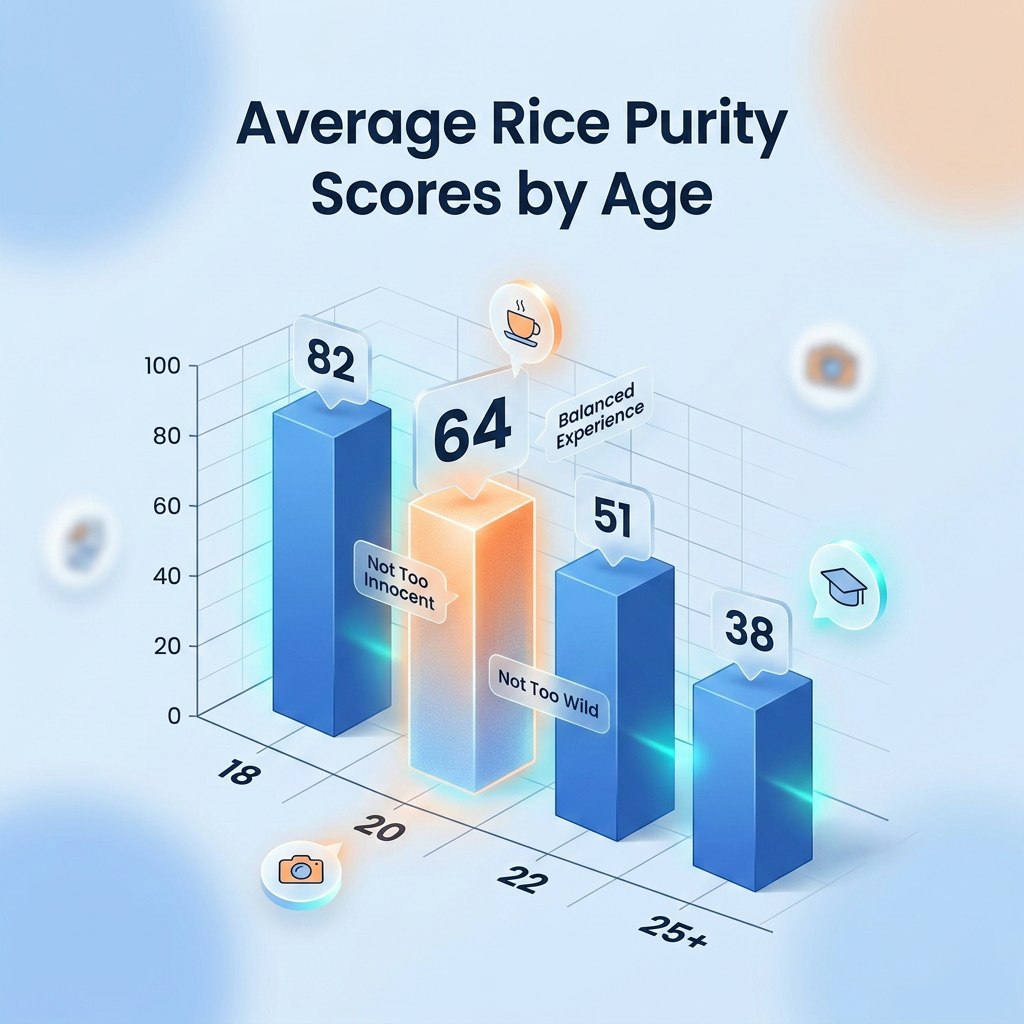
Average Rice Purity Score for 20 Year Olds: In 2026, the average rice purity score for a 20 year old in the US or Europe typically ranges between 55 and 75. If you are 20 and have a 64, you are exactly where you are supposed to be. You are within the standard deviation of your peers. For younger users, you can compare this with the average rice purity score for high schoolers to see how quickly scores typically decline during those formative years.
Is 60 a Good Rice Purity Score?
Since 64 and 60 are very close, people often ask: is 60 a good rice purity score? The transition from the 60s to the 50s is often seen as the move from “Socialite” to “Experienced.” A 60 is still a very healthy score that indicates a person who is open to new experiences but still has boundaries. If you want to know more about the “ideal” number, check our guide on what is a good rice purity score.
How to Lower Your Rice Purity Score (If You Want To)
Some users feel their 64 is “too high” and want to know how to lower rice purity score results. If you feel like you’ve missed out on certain life experiences, the best way to lower your score isn’t just to check boxes—it’s about safely stepping out of your comfort zone. Whether it’s traveling to a new city in Europe or attending a local US music festival, making memories is the key. Read our full tips on how to lower your rice purity score for more ideas.
Conclusion: Embrace Your 64
So, is 64 a bad rice purity score? Absolutely not. It represents a person who is living life, making memories, and staying balanced. In 2026, where social media often makes us feel like we aren’t doing enough, a 64 is a reminder that you have a healthy mix of innocence and adventure. Whether you are aiming for a 99 or a 9, your score is just a snapshot of your journey so far.
What’s your next move? If you haven’t taken the latest version yet, head over to our Homepage and see if your score has changed today!
This is such a comprehensive guide! I’ve seen the Rice Purity Test all over TikTok lately, but I didn’t actually know the history behind it. Thanks for breaking it down so clearly!